
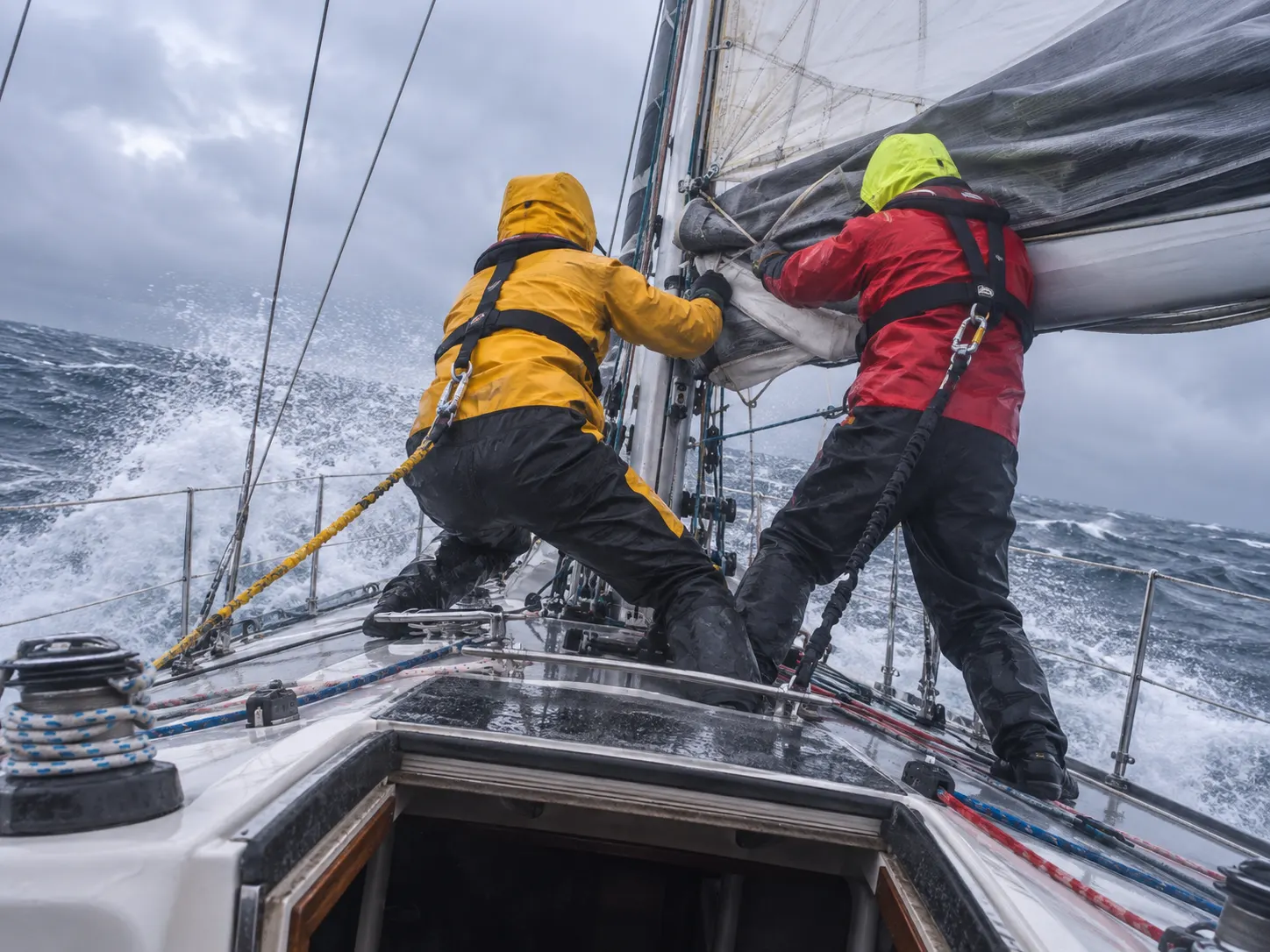
Illustrative image

Deliveries

Challenging is not the same as reckless.

I take on the passages that need judgement: upwind into the monsoon, short weather windows, new boats with unproven systems. I take them on because the planning is done properly, and I will tell you plainly when a window is wrong.

01

Offshore delivery

From Hong Kong across Asia-Pacific

Point-to-point and multi-leg passages around the South China Sea and beyond, between Hong Kong, the Philippines, Taiwan, Vietnam, Malaysia, Singapore, Thailand and mainland China. Logged routes include Hong Kong to Nha Trang, Nha Trang to Johor, Malaysia to Phuket, Subic Bay to Hong Kong, Kota Kinabalu to Hong Kong and Hong Kong to Taiwan.

  • Route and weather-window planning around the monsoons and the typhoon season
  • Clearance paperwork and crew lists for each country
  • A crew of three to six, chosen and briefed for the boat and the route
02

Catamaran delivery

Large cruising catamarans, new or pre-owned

A large catamaran behaves differently offshore: windage, bridge-deck slamming, twin-engine fuel planning and complex electrical systems. My recent command was a 1,050 nm delivery of a 60 ft cruising catamaran from Kota Kinabalu to Hong Kong, and I sailed as mate on a Fountaine Pajot Alegria 67 from La Rochelle to Bilbao across the Bay of Biscay in December.

  • New-boat deliveries for dealers, from the shipping port or the factory
  • Fuel and generator planning built from measured consumption
  • Systems familiarisation and a written defect list on arrival
03

Performance and race boats

From sport boats to maxis

I race offshore, so I know how to deliver a race boat without breaking it, and how to get it to the start line rested and ready. I have race wins and podium finishes in Asia’s major offshore races from years as core crew on a Jeanneau Sun Fast 3600. I also sailed a season as mainsheet trimmer on a McConaghy-built Ker 46+, after a season as grinder on a Ker 42 the year before. I have been delivery captain on a Rapido 40 trimaran and a Solaris 60, and crew on a McConaghy 75. Read the trimaran passage story.

  • Feeder and return deliveries for Asia-Pacific offshore races
  • Sail and rig care on delivery, with race sails stowed and protected
  • Race crew available on request
04

Owner-aboard passages

Coaching on your own boat

Many owners want to sail their own boat home. I skipper, you sail, and by arrival you know her systems, her reefing points, her motion in a seaway and the limits you should respect.

  • Watch-keeping, night sailing and heavy-weather preparation
  • Engine, electrical and watermaker routines
  • A written handover of everything we learned about the boat
05

Commissioning and sea trials

Before the passage, the sale or the season

A short sea trial before a long passage catches most of the problems that would otherwise surface 200 miles offshore. I run structured sea trials and readiness checks, and I give you a prioritised list of what must be fixed, what should be fixed and what can wait.

Hands-on with the engines. MCA Approved Engine Course (AEC 1): fuel, cooling and electrical faults are diagnosed and fixed at sea where it’s safe to do so, and logged for your yard.

  • Safety equipment, rig, steering, engines and bilge systems
  • Photo condition report for owners and brokers
  • Yard liaison for the critical items
  • Sea trials, yard and slipway moves, boat-show berths and owner days in Hong Kong on yachts of any length (PVO Grade 1)

In Hong Kong waters

Over 15 metres in Hong Kong

In Hong Kong, the boat licence most people hold, the Pleasure Vessel Operator Grade 2, stops at 15 metres (about 49 ft). Above that, the person in charge must hold Grade 1. It takes a year in charge of a powered vessel after Grade 2, then a Marine Department chart-work paper and a seamanship oral; the department’s own figures put the number moving up at around 30 people a year. I hold the Grade 1. If your yacht is over 15 metres, I can take charge of her in Hong Kong waters as well as offshore.

What it means for owners

  • Sea trials, yard and slipway moves, boat-show berths and owner days in Hong Kong on yachts of any length
  • The first and last miles of a delivery, in and out of Hong Kong, under the same captain
  • Ongoing captaincy for larger catamarans and yachts that a Grade 2 holder can’t legally take out

Grade 2 covers pleasure vessels of not more than 15 m; Grade 1 covers any pleasure vessel in Hong Kong waters (Marine Department). About 30 people a year moved up from Grade 2 to Grade 1, the 2015–2016 average reported to the Local Vessels Advisory Committee (Marine Department, LVAC minutes, Dec 2016). Offshore passages run on the MCA certificate of competence.

Every delivery includes

  • Pre-departure readiness check and photo condition report
  • Written passage plan, weather window and crew list
  • Daily position and status update to the owner
  • Fuel, engine-hours and expense log against receipts
  • Handover report with photos and a prioritised defect list

What I ask of the owner

  • Hull insurance that covers the voyage area and names me as delivery skipper
  • A boat that is fundamentally seaworthy, or time to make it so
  • Ship’s papers, and an authorisation letter for clearance
  • An agreed budget for expenses, standby and weather days

How quotes work

A day rate or a lump sum for the passage, whichever suits the job. Flights, provisions, fuel, port and clearance fees are charged at cost against receipts. Standby and weather days are agreed in advance. A deposit secures the dates.

When I will say no

I will not sail a boat I consider unseaworthy, and I will not force a window for a schedule. If the weather is wrong, we wait, and you will know why in writing. That right is written into every delivery agreement.

Seasons

The South China Sea runs on two monsoons.

The northeast monsoon dominates from about November to March and the southwest monsoon in summer, with lighter, more thundery transitions in between. Surges behind each new high can push the Taiwan Strait to gale force. I plan every passage around that rhythm. Read how I choose a window.

SeasonTypical patternWhat it means for a delivery
Nov–MarNortheast monsoon, with surges every few days; tropical cyclones still occur in November and occasionally DecemberSouthbound passages are fast downwind; northbound passages are upwind and need well-chosen windows between surges. November passages are also planned around cyclone forecasts
Apr–MayTransition: lighter winds, thunderstorms; the first tropical cyclones from MayGood windows for Taiwan and the Philippines; more motoring, so fuel planning matters
Jun–SepSouthwest monsoon and tropical cyclone seasonShort hops only with reliable shelter; long passages planned around cyclone forecasts
OctTransition to northeast monsoon; late tropical cyclonesWatch the forecast closely; the first surges arrive in the north

Tropical cyclones in the Hong Kong Observatory’s area of responsibility average about 0.8 in May, 1.7 in November and 0.7 in December (1961–2020), against 3.1 in August (Hong Kong Observatory).

Tell me the boat, the route and the window.

I’ll come back with a passage plan and a clear quote within 48 hours (or within 48 hours of reaching port if I’m on passage): day rate or lump sum, with expenses at cost.

Request a passage plan